Roof ventilation in Pittsburgh, PA
Ridge vents and soffit vents let a roof breathe. A hot, damp attic quietly shortens the life of a roof. Good attic ventilation pulls cool air in low and lets warm air out high, which protects the shingles, cuts down condensation and helps stop ice dams. Depending on the house, that can mean roof ridge ventilation, soffit vents or attic fan installation with an attic ventilation fan.
Rough guide: Usually $400 to $1,800
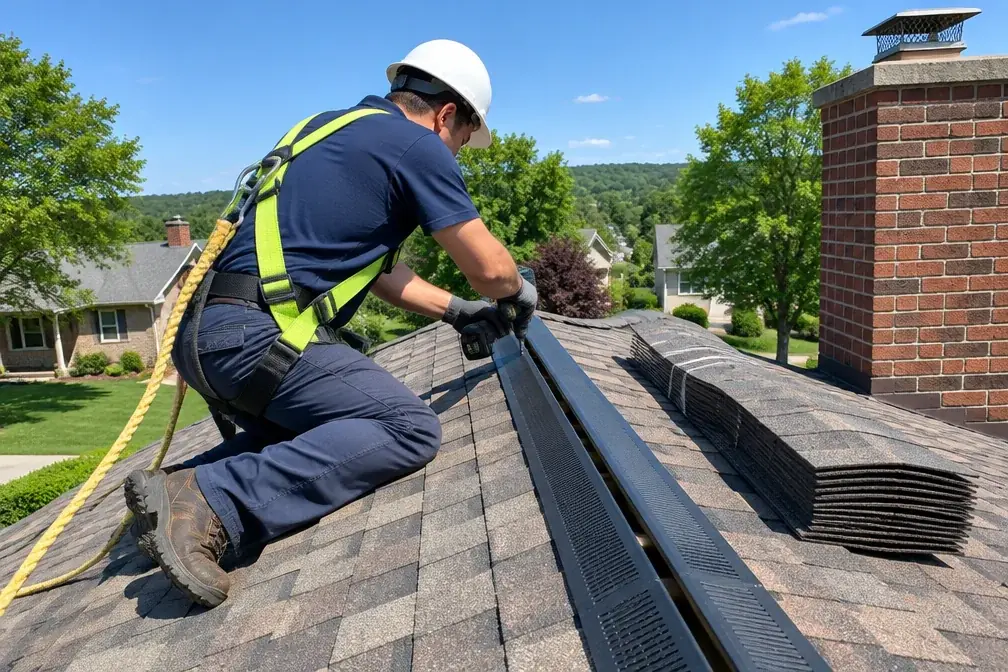
How attic ventilation works
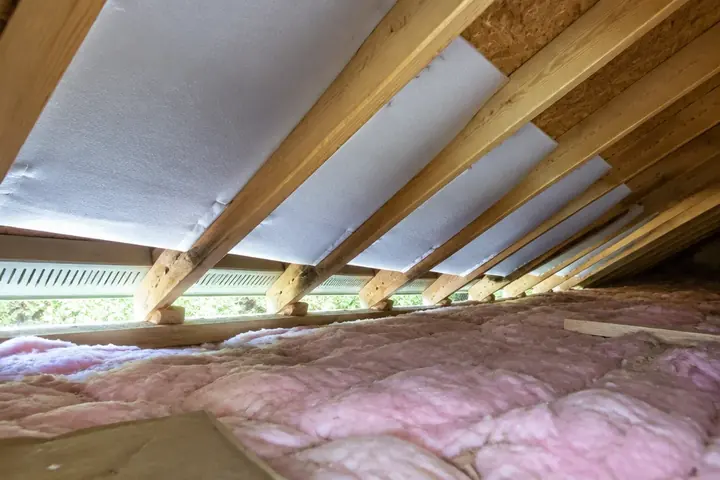
A good attic ventilation system works like a chimney. Cool air comes in through attic air vents at the soffit, which is called soffit ventilation, warms up and rises, then leaves at the ridge. In summer, that carries heat out, so the shingles don't bake from below. In winter, it carries moist air out and keeps the roof deck cold, so snow doesn't melt from underneath.
Adding a ridge vent usually costs $8 to $15 per foot, and less during a roof replacement. The usual guideline is about 1 square foot of vent area for every 150 to 300 square feet of attic floor, split evenly between intake and exhaust. Exhaust without enough intake is the most common mistake we see, since a ridge vent can't pull air that has no way in.
Roof ventilation systems we install
- Ridge vents. A ridge vent roof has a continuous vent along the peak, hidden under ridge cap shingles.
- Soffit vents. Vented panels or strips at the eaves that let in fresh air.
- Attic baffles. Channels that keep insulation from blocking the soffit air path.
- Roof vents. Box vents and other roof air vents for roofs with little ridge to work with.
- Gable vents. Common on older homes, often best left alone or closed when ridge vents go in.
- Attic exhaust fans. Powered attic vent fans with an attic fan thermostat, for attics that can't vent passively.
Ridge vents or an attic fan?
For most roofs, a ridge vent with good soffit intake is the best answer. It has no moving parts and runs all the time. An attic fan can help on a hard-to-vent roof, but it can also pull conditioned air out of the house through ceiling gaps if the attic isn't air-sealed. We would seal those gaps first, then decide. If you have an old fan, we can check that the thermostat and wiring still work, with an electrician for any new circuit.
Ventilation on older Pittsburgh homes
Many older houses here were built with no soffit vents at all, or they have insulation packed tight into the eaves. Brick cornices and box gutters can make intake harder too. There are still options, including small drilled vents, fascia vents and vents placed low on the roof. Cape Cods and rooms built into the roof need particular care, since there is little attic space for air to move through.
The best time to fix this is during a roof replacement, when the ridge is open anyway. It also matters for your shingle warranty, since many manufacturers expect proper ventilation.
How the work goes
- Attic check
We look at the deck, insulation, soffits and existing vents.
- Do the numbers
We work out how much intake and exhaust the attic needs.
- Open up the air path
We add soffit vents and baffles so air can actually get in.
- Add the exhaust
We cut in a ridge vent or roof vents, then seal up.
Common questions
Does a metal roof need ventilation?
Yes. A metal roof still needs a vented attic to carry off heat and moisture, so we include a metal roof ridge vent where the roof calls for it.
Does a new roof help with insulation?
Not directly, since shingles don't insulate. But new ventilation and air sealing done at the same time can make a real difference.
What causes ice dams to form?
Heat escaping into the attic melts snow on the upper roof, and the water refreezes at the cold eaves. Better attic ventilation and air sealing keep the roof deck cold.
Do metal roofs have ridge vents?
Yes. A ridge vent sits under a metal ridge cap with a closure that keeps out insects and wind-driven rain.
Can a bathroom fan vent into the attic?
No. The building code Pennsylvania uses as of 2026 says bathroom exhaust must go directly outdoors, and it bars venting into an attic, soffit, ridge vent or crawl space. The duct should end at a proper roof or wall cap.
Do I need baffles in my attic?
If insulation reaches the eaves and you have soffit vents, yes. As of 2026, the code requires at least a 1-inch air space between the insulation and the roof deck at the vents, and baffles keep that channel open from the eaves to the ridge.